Create a Better Experience: B2B Trade Show Tips
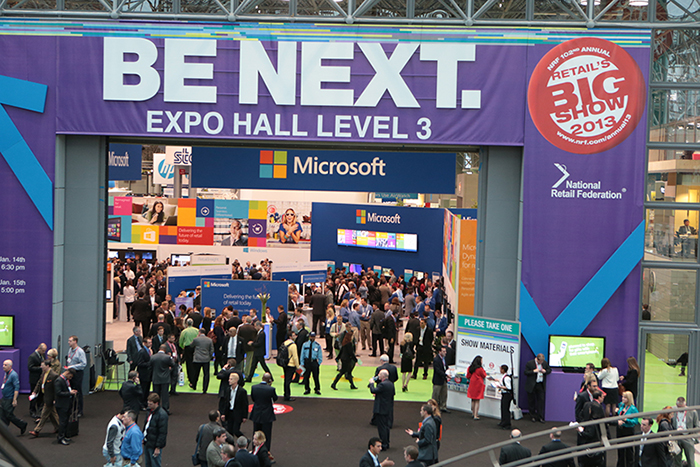
National Retail Federation/Flickr
Forrester Research’s 2014 survey report of top B2B CMOs revealed that 20 percent of their marketing budget – the biggest slice of the marketing mix pie – was being allocated to trade shows, conferences, and industry events.
Hardened veterans of the exhibition circuit view trade shows as a mostly tedious but necessary investment of time to build brand awareness, network with industry peers, reconnect with current clients and start relationships with potential prospects.
Here are some practical B2B trade show tips to improve your approach and create a better experience for both you and your visitors.
Dress for Success
Let’s start with the obvious. Look good. Save your schlubby jeans for the booth set up. A well-dressed man or woman symbolizes professionalism and exudes confidence. Not only does it affect how people perceive you but it can also alter the way you see the world.
A new study suggests that people who wear formal clothing become abstract thinkers and tend to focus on the bigger picture rather than on minor details. Trade shows are about the bigger picture and long-term objectives, so get in the right mood and wear your Sunday best.
Staff Your Booth With Passionate People
Unless your booth display is an elaborate inflatable bouncy castle, visitors won’t likely remember what your humble 10 x 10 booth looked like after the show is over. What they will remember is your people.
The interaction visitors have with your people at the booth will have a lasting impact. Don’t put the poor temp who just started or the dour-faced employee you’re trying to punish out there to represent your brand. Keep the fast-talking, never-asks-a-question account executive away too. And no models, please! Think of your trade show booth as part of the customer experience journey and staff it accordingly.
Avoid Product Sheet Dumps
Too often product sheets are used as conversation crutches. Building a fort of brochures around you does not make your booth particularly inviting either. Save some trees and bring only a few key pieces of eye-catching collateral. Spend your money on an innovative space-saving brochure holder so you don’t have to lug around those unsightly plastic holders. Move that barricade of a table away from the entrance of your booth and focus your efforts on being welcoming, curious, and asking the right questions.
Games, Giveaways and Grand Prizes
In my 10 years of trade show experience, I have yet to see a prize winner convert into a buyer. It doesn’t matter. Pens, putting greens, Plinko, popcorn, product prizes, and hockey jerseys – yes, even a Leafs jersey – will all increase traffic.
Ideally, your gimmick should connect to the audience you are trying to reach. For example, one clever software security company handed out urinal cakes with the imprinted words: “You never know who is watching your data flow.”
While scatological swag may not be appropriate for your line of business, giveaways are an affordable way to draw people to your booth. It can encourage interaction and conversation. Announce your prize winner, with their permission of course, in a post-show email. People will appreciate it and it’s another opportunity for you to reach out.
Show, Speak, and Sup
A booth is just one of the marketing opportunities available to you at a conference and trade show.
Flex your expertise muscles and differentiate yourself from the rest of the exhibitors by applying to present or facilitate a seminar. Pick a topic that will resonate with attendees, focus on research and business issues, not products. The goal here is to earn credibility.
If budget allows, take advantage of conference dinners and award night ceremonies. Socialize and gain access to delegates who didn’t visit the trade show floor or attend your presentation.
After the Show: Prove and Optimize
According to a survey conducted by Exhibitor Media Group, 72% of organizations do not track the percentage of leads that convert to a sale. That’s not surprising.
Without a proper lead-to-revenue management system in place to track and cultivate trade show leads, new business isn’t as easy to measure as it might seem.
Even if your organization has the proper systems in place, you have to be patient as most trade show leads aren’t ready to buy; they need to be nurtured and that’s a long sales cycle.
Forrester Research suggests that companies that excel at lead nurturing generate 50% more sales ready leads at 33% lower cost.
Apart from how many business cards were collected and given out, don’t forget to measure how many brochures were taken, how many current customers you met, and how many qualified follow-up calls were agreed to – useful numbers for measuring traffic quality and for planning the next show.
SHARING IS CARING: